
Exhibitionism vs Privacy on iFreechat: 7 Controls
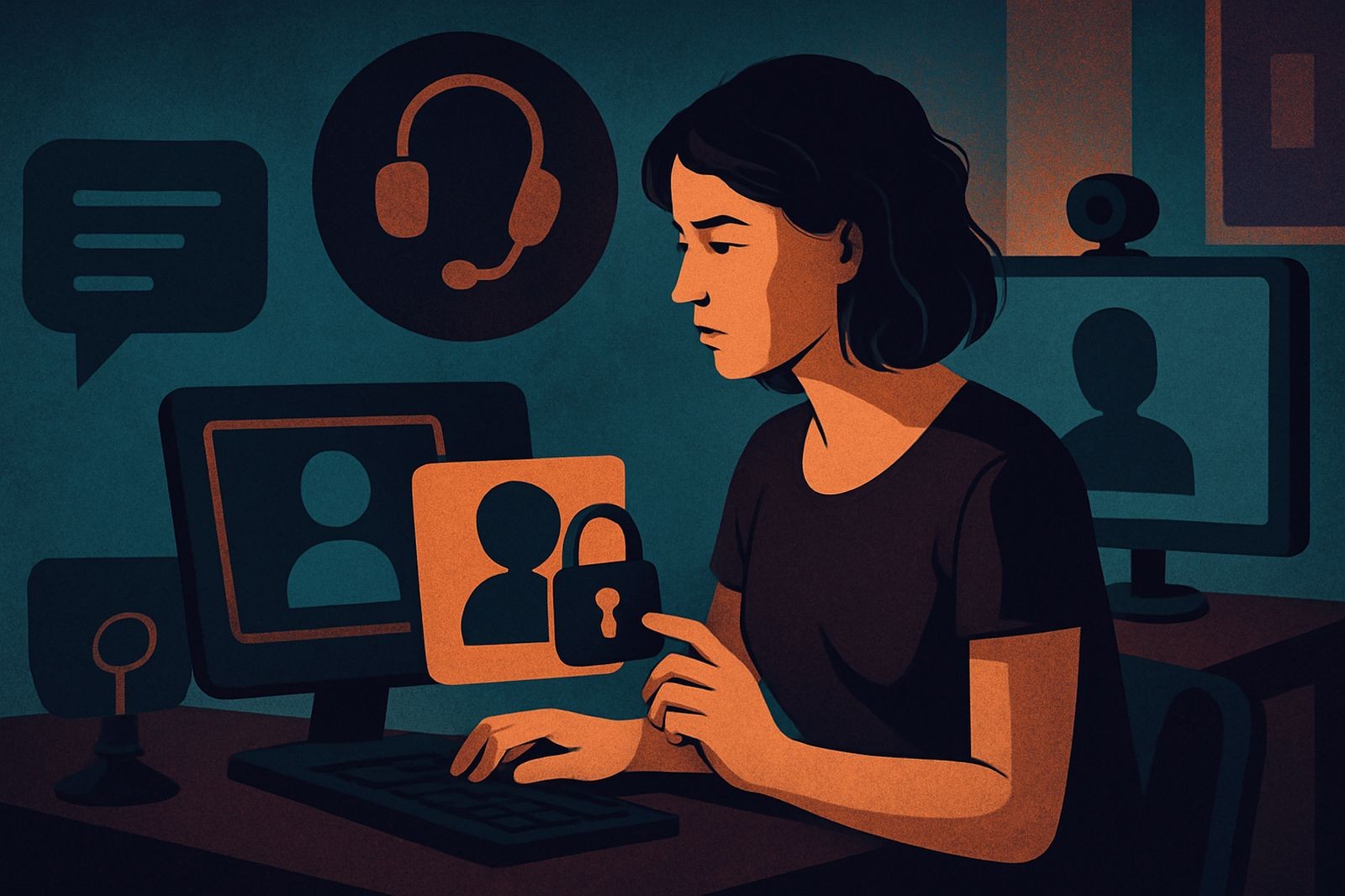
iFreechat has been running since 2002, and in that time the platform has built out three distinct chat modes — text, voice, and cam — plus a companion forum system with profiles and private messaging. That layered structure means your exposure level isn't binary. It's a spectrum with at least seven distinct control points, and most users only think about one or two of them.
1. Your Username Is Your First Leak
Because iFreechat lets you enter any chat room without registration — just pick a username, confirm you're 18+, and go — many people treat the username as throwaway. That's a mistake in both directions. A username like "Mike_from_Tampa_87" broadcasts your name, city, and probable birth year to every person in the room. On the other end, something aggressively sexual like "HungDaddy4U" sets an expectation that attracts a specific type of attention and repels everyone else before you've typed a single message.
The practical move: treat your username as a filter. It's the one piece of information visible to the entire room at all times. If you register your username to reserve it, that's even more reason to pick something that doesn't pin you geographically or personally. Registered accounts unlock forum access and private messaging to offline users, which means your username persists across sessions and becomes searchable.
2. Text Chat vs. Voice Chat vs. Cam — Each Exposes Different Things
This seems obvious, but the specifics matter. Text chat in a room like Sex Chat (~317 users online at peak) reveals nothing biometric. Your typing speed, vocabulary, and sentence structure are the only fingerprints. Voice chat adds your accent, vocal pitch, and background noise — someone can hear your roommate's TV, your dog, traffic patterns that suggest a neighborhood. Cam chat adds everything visual: your face, your room, your tattoos, the brand of laptop on your desk.
Here's a rough edge most people miss: voice chat captures ambient audio you're not aware of. A notification sound from a specific app, a family member calling your real name from another room, a distinctive doorbell. These are small identity leaks that text chat simply cannot produce. If privacy matters to you but you still want more intimacy than text, voice with headphones and a quiet room splits the difference better than cam with a carefully angled camera.
3. Official Rooms vs. User-Created Rooms Have Different Moderation
iFreechat runs a hybrid moderation system. Official rooms — Lounge Chat, BDSM Chat, RolePlay Chat, Confessions, and the rest of the 19+ permanent rooms — use human plus AI moderation. User-created rooms, which include everything from regional community rooms to niche interest spaces, rely on AI moderation and community reporting only.
What this means for your exposure: in an official room, a human moderator may intervene if someone pressures you to share personal details or if harassment escalates. In a user-created room, you're relying on automated systems and other users flagging problems. Neither system is perfect. The AI can miss context — sarcasm, coded language, gradual boundary-pushing across many messages. The practical takeaway is that if you're experimenting with more exhibitionist behavior, doing it in an official room gives you a faster safety net than a user-created room where no human is watching in real time.
4. The Forum Profile Exposes More Than You Think
Registered users gain access to iFreechat's forum system, which includes profiles, posts, and the ability to send private messages even when someone is offline. Your forum profile persists. Unlike a chat session that disappears when you close the tab, forum posts stay indexed. A comment you leave on a thread six months ago is still there, and someone interested in you can scroll through your post history to build a composite picture of your interests, schedule, and personality.
If you're someone who enjoys being expressive in free sex chat rooms but wants to keep that separate from your forum identity, the simplest approach is to use different usernames — one registered for forums, one unregistered for chat sessions. The tradeoff: unregistered chat usernames can't be reserved, so someone else might grab yours between sessions.
5. Private Messages Create a False Sense of Walls
Moving from a public room to a private message feels like stepping into a locked room. It isn't. The other person can screenshot anything you send. On iFreechat, private messaging works through both the chat system and the forum system for registered users. Neither platform encrypts messages end-to-end in the way Signal or similar apps do. Treat every private message as potentially public.
A concrete example: someone in Confessions (~69 users online) shares something vulnerable. Another user DMs them to continue the conversation privately. The shift from anonymous public confession to one-on-one private chat often triggers a rapid increase in personal disclosure — real names, locations, photos. The privacy of the DM is an illusion of architecture, not an actual guarantee. The person on the other end is still a stranger.
6. Cam Chat Background Audits
People who use Cam Chat tend to focus on what's in frame from the neck down. Meanwhile, a bookshelf behind you shows titles that reveal your interests. A window shows daylight conditions that narrow your timezone. A prescription bottle on a desk, a company lanyard, a school pennant on the wall — all of these have appeared in adult chat cam sessions and all of them leak identity.
Before going on cam, do a background sweep. Point your camera at your intended setup and look at the image as a stranger would. Better yet, use a plain wall or a physical backdrop. Virtual backgrounds exist in some video tools but iFreechat's proprietary cam system may not support them natively, so a $15 curtain behind your chair does the job more reliably than software.
7. Timing and Room Size Shape Your Visibility
A room with 300 people scrolling fast buries your messages in seconds. A room with 8 people makes every line you type the center of attention for minutes. The same message — the same level of exhibitionism — lands completely differently depending on audience size and time of day. Late-night hours (roughly 11 PM to 3 AM in US timezones) tend to produce smaller, more focused rooms where individual users get more scrutiny. Peak hours produce noise that functions as camouflage.
If you want to be expressive with lower stakes, larger rooms during peak hours let you test boundaries without every message becoming a spotlight moment. If you want genuine interaction and don't mind visibility, smaller rooms or off-peak hours deliver that — but with the tradeoff that fewer people means each participant is more memorable, more trackable across sessions, and more likely to be engaged with directly.