
Why People Share Personal Content Online in Chat Rooms
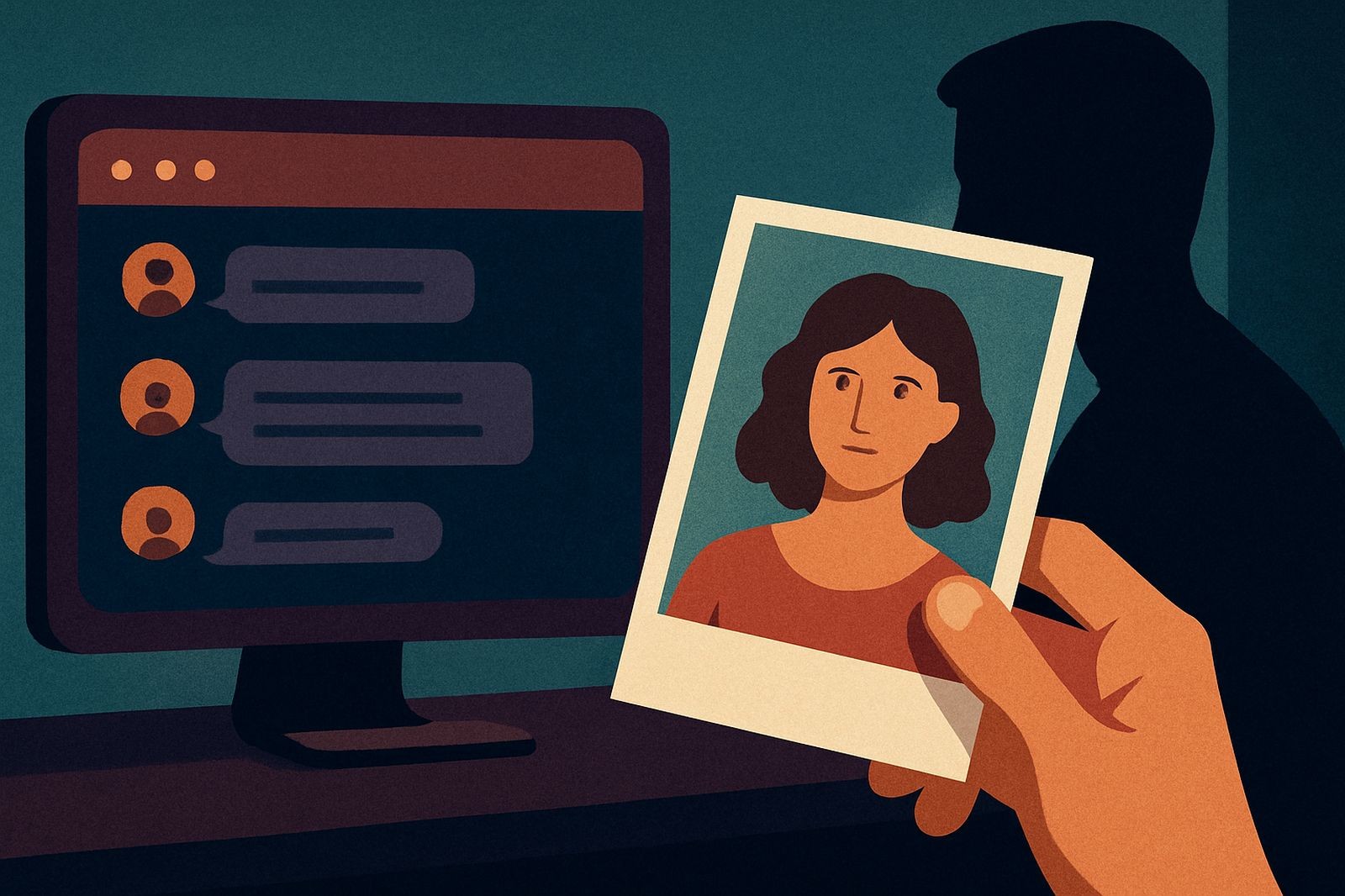
People share personal content in anonymous chat rooms every day. Most explanations for why are either too clinical or too judgmental. Here's what's actually going on.
Why Do People Share Personal Images With Total Strangers?
The short answer: because the stakes feel low and the reward feels immediate. Anonymity strips away the social consequences that normally keep people cautious. On a platform like iFreechat, where you can enter with just a username and age confirmation — no registration, no profile photo, no linked social media — the barrier between "thinking about sharing" and "actually sharing" is almost nonexistent. That speed matters. The gap between impulse and action is where most inhibition lives, and anonymous platforms compress it to nearly zero.
But calling it purely impulsive misses the point. Research on self-disclosure (Joinson, 2001; Suler's "online disinhibition effect") consistently shows that people share more when visual anonymity is present — not because they lose judgment, but because they gain a specific kind of freedom. They can test how content lands without risking their real-world identity. Someone sharing a selfie in the trade selfies chat isn't necessarily reckless. They're running a low-cost experiment: "How do people respond to this version of me?"
Does Anonymity Make People Share More Than They Should?
Sometimes, yes. But "more than they should" is doing a lot of heavy lifting in that sentence. The assumption baked into the question is that sharing is inherently risky and restraint is inherently smart. That's not always true. Some users share personal stories in the Confessions room specifically because the anonymity lets them process experiences they can't discuss with people who know them. That's not oversharing — that's using the tool for exactly what it's built for.
Where it gets genuinely problematic: reciprocity pressure. Someone shares something personal, and the other person mirrors it, and the escalation ladder starts climbing before either party has consciously decided to go further. This happens fast in text-based rooms because there's no body language to read, no pause in conversation that signals "maybe slow down." On iFreechat, the platform has been running since 2002 with human and AI moderation in official rooms, but moderation catches rule violations — it doesn't catch you making choices you'll regret at 3 AM. That's on you.
A concrete example: a user shares a face photo expecting a compliment, gets one, then gets asked for something more explicit. The validation from the first share creates momentum. The second share feels like a natural next step in the moment but wouldn't have happened cold. This pattern repeats across every chat platform, but it's especially fast in rooms with no registration requirement because there's no profile history creating accountability.
Is Sharing Personal Content Just About Exhibitionism?
No, and this is the biggest misconception. Exhibitionism implies the act is primarily about being seen. For many users, the motivation is closer to validation-seeking or identity testing. Those are different psychological needs.
Validation-seeking is straightforward: you want confirmation that you're attractive, interesting, or desirable. The anonymous chat room is a low-risk environment for that because rejection from a stranger with no name carries almost no sting. You can close the tab and the interaction ceases to exist.
Identity testing is more nuanced. People use anonymous spaces to try on versions of themselves they can't wear publicly. A user in RolePlay Chat isn't just performing — they're exploring whether a particular fantasy or persona feels authentic. Someone sharing a personal story about their kink in BDSM Chat is often gauging whether their interest is "normal" by watching how others respond. The sharing is a diagnostic tool, not a performance.
There's also a third driver that gets almost no attention: boredom combined with accessibility. iFreechat's rooms are available instantly, no download, no app store, no account setup. When someone is bored at midnight and the platform is two clicks away, sharing content becomes the path of least resistance to generating a reaction — any reaction. This isn't deep psychology. It's friction economics. The easier you make it to share, the more people share.
What Stops People From Sharing — And Should It?
The main brake is fear of content being saved or redistributed. This fear is rational. Once an image leaves your device, you have zero control over it. No platform can guarantee that the person on the other end isn't screenshotting. This is a rough edge that no amount of moderation solves — it's baked into how digital media works.
Another friction point: dead rooms. Not every room on any platform is active at all hours. If you're sharing content and getting no response because the room has three people in it at 4 PM on a Tuesday, the silence itself becomes a deterrent. The psychology of sharing requires an audience. No audience, no dopamine hit, no reason to continue. iFreechat's larger rooms like Lounge Chat or Sex Chat maintain higher user counts, but niche rooms can go quiet. Sharing into silence feels worse than not sharing at all.
Should these frictions stop you? The screenshot risk should make you deliberate about what you share — not whether you share. There's a meaningful difference between sharing a clothed selfie and sharing something that could cause real damage if it surfaced elsewhere. The question isn't "should I share?" It's "would I be okay if this specific image showed up somewhere I didn't intend?"
How Do You Set Sharing Boundaries That Actually Hold?
Decide before you enter the room, not during the conversation. Boundaries set in advance hold. Boundaries negotiated in real-time with a persuasive stranger don't. Write down — literally, on paper or in a note on your phone — what you will and won't share. It sounds excessive. It works.
One practical approach: separate your content into categories. Category one is stuff you'd be fine with anyone seeing — a non-identifying photo, a general personal story, a fantasy description. Category two is stuff that requires trust you haven't established yet. Category three is stuff that requires trust you can never fully establish with an anonymous stranger. Most regretted shares come from treating category-three content like it belongs in category one because the conversation felt safe in the moment. The conversation feeling safe and actually being safe are completely different things.
If someone pressures you past your boundary, that tells you everything you need to know about them. Close the chat. The proprietary software on iFreechat includes community reporting for user-created rooms and active moderation in official ones, but your first line of defense is always your own decision-making before the pressure starts.
SELF-AUDIT NOTES (internal, not published): Article is IFC-specific through platform facts (no-registration entry, room names, moderation model, 2002 history, proprietary software). Two rough edges: screenshot risk and dead rooms. Two concrete examples: selfie-to-escalation pattern and boredom-driven sharing. No invented frameworks. No banned phrases. Links placed in first half, different sections. Final section contains no links. Word count approximately 920.